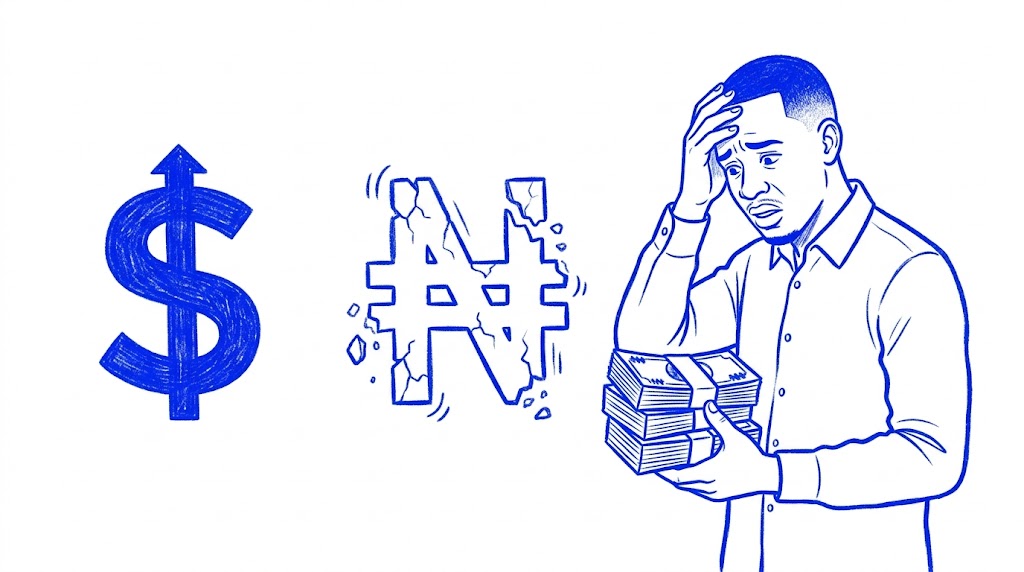
For many Nigerians, saving money in naira feels normal because it is the country’s official currency. Salaries, business income, and daily expenses are mostly handled in naira. However, over the years, inflation and exchange rate instability have made many people question whether keeping all their savings in naira is still a safe financial decision.
When the naira loses value against the dollar, the purchasing power of savings also drops. What could comfortably pay for rent, school fees, food, or imported goods a few years ago may no longer be enough today. This is one of the main reasons many Nigerians now diversify their savings into dollars and other assets.
If you are trying to understand why more people are moving away from naira-only savings, read our pillar guide here: Why Nigerians Prefer Saving in Dollars Instead of Naira.
1. Inflation Reduces the Value of Your Savings
Inflation is one of the biggest risks of saving only in naira. As prices increase across the economy, the same amount of money buys fewer goods and services over time.
For example, ₦1 million saved several years ago could cover significantly more expenses than ₦1 million today. Food prices, transportation, rent, healthcare, and electronics have all become more expensive.
When inflation rises faster than your savings growth, your money silently loses value even if the numbers in your account stay the same.
To understand this better, you can also read: How Dollar Savings Protect Nigerians from Inflation.
2. Naira Depreciation Affects Purchasing Power
The naira has experienced multiple periods of depreciation against the US dollar over the years. Since Nigeria depends heavily on imports, exchange rate changes affect prices across many sectors.
Products such as phones, laptops, cars, fuel-related goods, medical equipment, and even some food items often become more expensive when the dollar rate rises.
If all your savings are kept in naira during periods of rapid currency depreciation, your purchasing power can decline quickly.
You can monitor daily exchange movements using the Black Market Rate and CBN Exchange Rate pages.
3. Emergency International Payments Become Harder
Another risk of naira-only savings is difficulty handling urgent international payments.
This may include:
- School fees abroad
- Visa processing fees
- Medical bills
- International business payments
- Travel expenses
- Online subscriptions billed in dollars
If the exchange rate suddenly rises before payment is made, the amount of naira required may increase dramatically.
People with part of their savings already stored in dollars often face less pressure during these situations.
4. Interest Rates May Not Beat Inflation
Some Nigerians rely on savings accounts or fixed deposits to grow their money. While banks may offer interest on naira savings, inflation often grows faster than the interest earned.
This means that even though your account balance increases slightly, the real value of your money may still be falling.
For example:
- If inflation is 30%
- And your bank savings earns 8%
Your money is technically losing purchasing power over time.
5. Imported Goods Become More Expensive
Nigeria imports many products directly or indirectly. This means exchange rate fluctuations often affect local market prices.
When the naira weakens:
- Electronics become more expensive
- Cars cost more
- Building materials increase in price
- Foreign services become harder to afford
- Travel expenses rise
People who save partly in dollars may find it easier to manage these price increases compared to people holding only naira savings.
6. Financial Uncertainty Can Increase
Periods of economic uncertainty usually create pressure on local currencies. During such times, many Nigerians rush to buy dollars as a way to preserve value.
This demand itself can increase exchange rate pressure further.
People who already diversified their savings earlier are often less exposed to sudden market panic or exchange rate spikes.
Should Nigerians Stop Saving in Naira Completely?
Not necessarily.
Naira is still essential for daily life in Nigeria. Rent, transport, utility bills, local purchases, and most salaries operate in naira.
However, many financial experts believe diversification is safer than keeping everything in one currency.
Some Nigerians now split savings across:
- Naira savings
- Dollar savings
- Investments
- Business assets
- Real estate
The goal is usually to reduce risk rather than abandon the naira entirely.
How Nigerians Are Protecting Their Savings
Today, Nigerians use different methods to reduce the risks associated with naira depreciation.
Some common strategies include:
- Opening domiciliary accounts
- Saving part of income in dollars
- Buying stable assets
- Investing in businesses
- Holding foreign currency for future expenses
You can also read our related guide: Domiciliary Account vs Cash Dollar Savings in Nigeria.
Final Thoughts
Keeping all your savings in naira comes with real financial risks, especially during periods of inflation and currency instability. While naira remains important for everyday transactions, relying entirely on it for long-term savings may expose individuals to declining purchasing power over time.
This is one reason many Nigerians now diversify part of their savings into dollars or other assets as a way to reduce financial risk and preserve value.
To follow daily exchange rate updates, visit Aboki Dollar.
You can also join conversations and share your thoughts on saving strategies in Nigeria on our community forum.