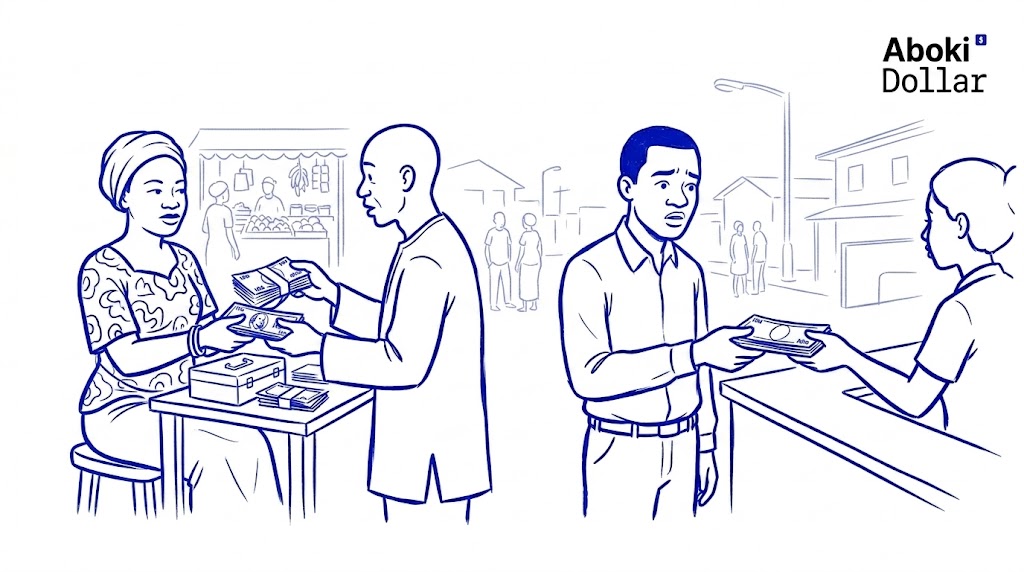
Many Nigerians use the black market to exchange dollars. But one question keeps coming up: is it actually legal?
The answer isn’t as straightforward as a simple yes or no.
To understand it properly, you need to look at how Nigeria’s foreign exchange system works and where the black market fits in.
If you’re just getting familiar with the differences, this full guide to black market vs CBN rates gives helpful context.
What the Law Says
In Nigeria, foreign exchange transactions are regulated by the Central Bank of Nigeria (CBN).
Officially, buying and selling foreign currency is expected to happen through:
- Licensed commercial banks
- Approved Bureau De Change (BDC) operators
These channels are regulated, monitored, and expected to follow set guidelines.
Where the Black Market Fits In
The black market refers to informal or unregulated exchange outside official channels.
This includes:
- Street traders
- Unlicensed currency dealers
- Peer-to-peer exchanges
These transactions are not formally approved by the CBN.
Is It Illegal?
Strictly speaking, exchanging money outside approved channels is not officially recognized.
However, enforcement is not always strict in everyday situations.
This is why the black market continues to exist and operate widely.
In practice, many individuals use it because of accessibility and speed.
Why People Still Use It
Despite the legal grey area, there are clear reasons why people rely on it:
- Easier access to dollars
- Faster transactions
- Fewer restrictions compared to banks
You can see how active this market is by checking the live dollar to naira rate.
Risks to Be Aware Of
Using informal channels comes with risks:
- No formal protection if something goes wrong
- Possibility of scams or fake currency
- Rates can vary depending on location and negotiation
These are important to consider before making any exchange.
Why the System Exists This Way
The reason the black market exists comes down to supply and demand.
When access to official forex is limited, people look for alternatives.
That increased demand creates a parallel system.
This also explains why rates differ, as discussed in why black market rates are higher than bank rates.
CBN Rate vs Market Reality
The official rate is controlled and structured.
You can check it on the CBN exchange rate page.
But in everyday transactions, many people deal closer to market rates due to availability.
What This Means for You
If you need to exchange dollars, you have options.
- Use official channels for more structure and regulation
- Use informal channels for easier access, but with more caution
Whichever you choose, it’s important to stay informed and compare rates.
You can use the currency converter to estimate values before making a decision.
Final Thoughts
The black market operates in a legal grey area in Nigeria.
It’s not officially approved, but it remains widely used because it fills a gap in access to foreign currency.
Understanding both the legal side and the practical reality helps you make smarter, safer choices when dealing with forex.