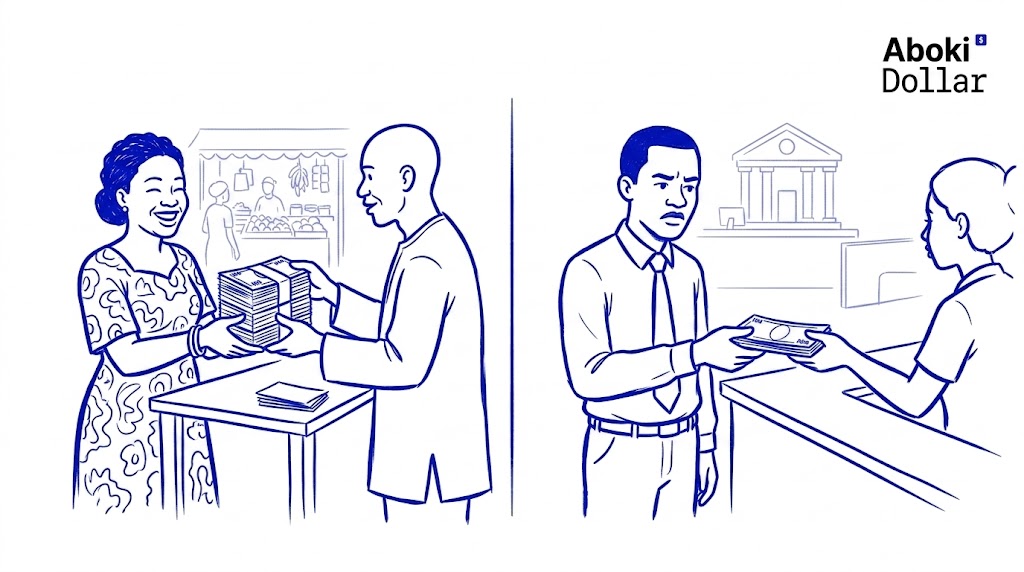
If you’ve ever checked the dollar to naira rate, you’ve probably noticed something confusing.
The rate from banks is different from what you hear on the street.
So which one is correct? And more importantly, which one actually applies to you?
To understand this properly, it helps to start with the basics. This complete guide to the dollar to naira exchange rate gives a clear overview.
What Is the CBN Exchange Rate?
The CBN (Central Bank of Nigeria) rate is the official exchange rate set and managed by the government.
It’s mainly used for:
- Government transactions
- Large business operations
- Selected bank-related forex access
You can check the current official rate on the CBN exchange rate page.
What Is the Black Market Rate?
The black market rate (also called the open market rate) is the price you’ll likely get when exchanging money outside official banking channels.
This includes:
- Bureau De Change operators
- Street traders
- Peer-to-peer exchanges
It reflects real-time demand and supply, which is why many people rely on the live dollar to naira rate for a more practical value.
Why the Two Rates Are Different
The difference comes down to access and availability.
Not everyone can easily get dollars through banks at the official rate.
When access is limited, people turn to other sources, increasing demand there.
That higher demand pushes the market rate above the official rate.
Simple Comparison
Here’s an easy way to look at it:
- CBN Rate: Lower, regulated, but harder to access
- Market Rate: Higher, flexible, and easier to access
This gap is one of the biggest features of Nigeria’s forex system.
Which Rate Should You Use?
It depends on your situation.
- If you’re dealing with official bank transactions, the CBN rate applies
- If you’re exchanging money personally, the market rate is what you’ll likely get
That’s why many Nigerians check both before making decisions.
How the Gap Affects You
The difference between rates has real impact:
- Imported goods become more expensive
- International payments cost more
- Remittance values change
Even small differences can add up quickly.
For example, you can compare outcomes using the value of 100 dollars in naira today.
Why the Gap Doesn’t Close Easily
As long as demand for dollars remains high and supply is limited, the gap will continue.
Policy changes can reduce it, but it often depends on:
- Foreign exchange supply
- Economic conditions
- Investor confidence
This is also linked to how rates move daily, explained here: why the dollar rate changes in Nigeria.
How to Stay Informed
Before exchanging money, it helps to:
- Check both official and market rates
- Compare across trusted platforms
- Use tools for quick calculations
You can use the currency converter to estimate real-time values instantly.
Final Thoughts
The CBN rate and the market rate serve different purposes.
One is controlled and structured, while the other reflects everyday reality.
Understanding both helps you avoid confusion and make better financial decisions whenever you’re dealing with foreign currency.