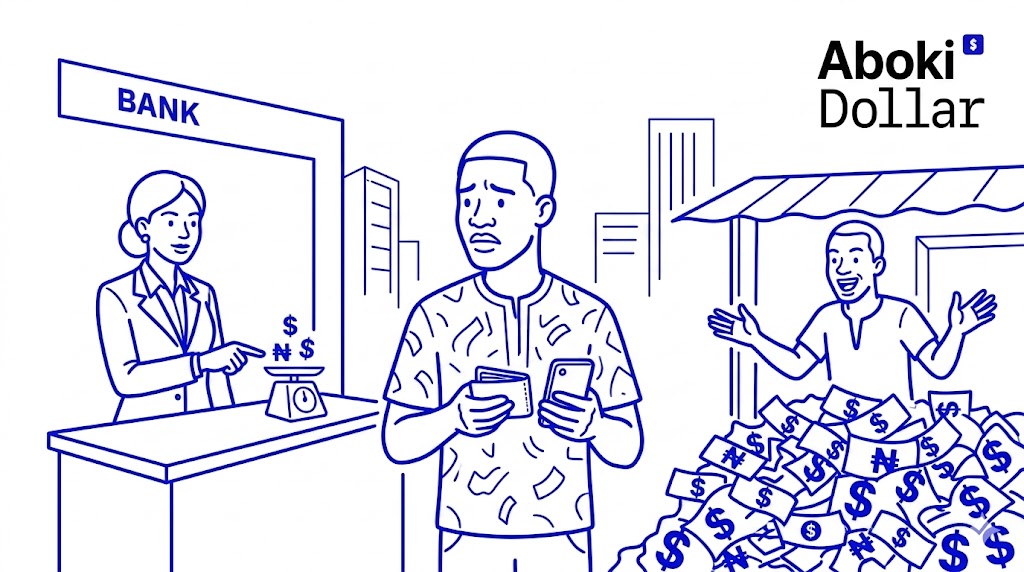
If you’ve ever compared exchange rates in Nigeria, you’ve probably noticed a clear gap. The dollar rate at banks is usually lower, while the black market rate is higher. This difference confuses a lot of people, but the reason behind it is actually straightforward.
It all comes down to access, demand, and how foreign exchange flows through the system.
What Are Bank (Official) Rates?
Bank rates are the official exchange rates set and managed within Nigeria’s formal financial system. These rates are influenced by policies from the Central Bank of Nigeria.
They are typically lower because the government tries to keep them stable and controlled. You can track these rates on the CBN exchange rate page.
What Are Black Market Rates?
Black market rates (also known as parallel market rates) reflect the real price people are willing to pay for dollars outside the official system.
These rates are driven purely by demand and supply. You can always check the latest figures on the live dollar to naira black market page.
Why Black Market Rates Are Higher
The gap between both rates exists for a few key reasons:
1. Limited Access to Dollars at Banks
Not everyone can easily buy dollars through banks. There are restrictions, documentation requirements, and limited supply.
When people can’t access dollars officially, they turn to the black market.
2. High Demand for Foreign Currency
Nigeria relies heavily on imports, international payments, and foreign services. This creates constant demand for dollars.
When demand is high and supply is limited, prices go up in the parallel market.
3. FX Liquidity Challenges
When there aren’t enough dollars in the system, pressure builds. This is known as low liquidity.
You can learn more about this in our guide on what FX liquidity means in Nigeria.
4. Market Freedom vs Regulation
Bank rates are controlled and influenced by policy decisions. Black market rates, on the other hand, are determined by real-time buying and selling.
This makes the black market more reactive to economic changes.
Real-Life Example
Let’s say the official rate is ₦1,300 per dollar, but demand is high and supply is tight. In the black market, the same dollar could sell for ₦1,500 or more.
This difference reflects what people are actually willing to pay to access foreign currency quickly.
You can calculate these differences easily using the Aboki Dollar currency converter.
Which Rate Should You Pay Attention To?
It depends on your situation:
- For official transactions: Use bank or CBN rates
- For real-world exchanges: Black market rates often reflect actual prices
For a full comparison, check our detailed guide on black market vs CBN rates in Nigeria.
Why the Gap Matters
The difference between both rates affects the entire economy:
- Importers adjust prices based on black market rates
- Consumers pay more for goods and services
- Businesses face uncertainty when planning costs
This is also one of the reasons explained in our breakdown of why the dollar rate changes daily.
Will the Gap Ever Close?
The gap can reduce when:
- Dollar supply increases
- Foreign investment rises
- Export earnings improve
- Economic policies stabilize the market
But as long as demand remains higher than supply, some difference between official and black market rates will likely continue.
Final Thoughts
Black market rates are higher than bank rates mainly because of demand, limited supply, and restricted access to official channels.
Understanding this helps you make better decisions when exchanging money, running a business, or planning international payments.
For accurate rates, real-time updates, and daily insights, visit Aboki Dollar and stay updated through our Bureau De Change news section.