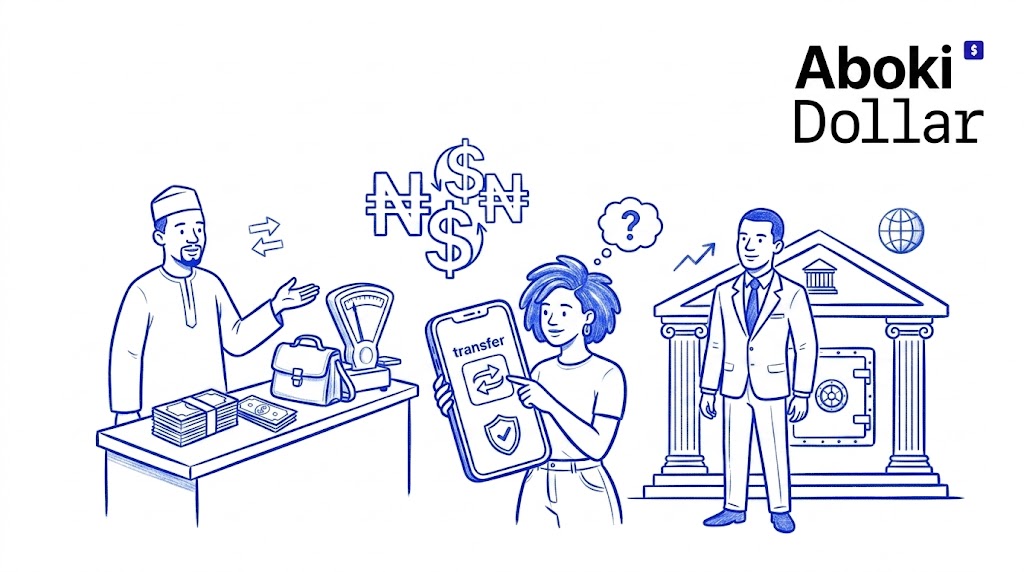
When exchanging dollars to naira in Nigeria, one question comes up again and again: where do you actually get the best value?
Is it the bank, a fintech app, or the black market?
The truth is, each option comes with different rates, fees, speed, and risks. If you don’t understand how they work, you could lose a significant amount of money on every transaction.
In this guide, we break it down clearly so you know exactly where to exchange your dollars depending on your situation.
Understanding the Three Main Options
Before comparing rates, it’s important to understand how each channel operates.
Banks (Official CBN Rate)
Banks in Nigeria use rates influenced by the Central Bank. These are considered the official exchange rates.
You can check the latest CBN exchange rate here.
- Usually the lowest dollar-to-naira rate
- Strict documentation required
- Limited access to forex
- Mostly used for imports, school fees, and approved transactions
Fintech Platforms
Fintech apps like remittance platforms sit between banks and the black market.
- Rates slightly better than banks
- Fast transfers and easy access
- Some hidden fees or conversion spreads
- Popular for diaspora remittances
If you’re sending money into Nigeria, you can also read best ways to send money to Nigeria at high rates.
Black Market (Parallel Market)
This is where most Nigerians go for real-time exchange rates driven by demand and supply.
Track the latest black market dollar to naira rate here.
- Highest rates available
- Instant access to cash
- No formal restrictions
- Higher risk if you don’t use trusted dealers
Which Option Pays More?
Here’s a simple comparison based on typical market behavior:
| Option | Exchange Rate | Speed | Accessibility | Risk Level |
|---|---|---|---|---|
| Bank | Lowest | Slow | Limited | Low |
| Fintech | Medium | Fast | High | Low |
| Black Market | Highest | Instant | Very High | Medium |
In most cases, the black market pays more in naira for every dollar. That’s why it dominates everyday transactions across Nigeria.
To understand why this gap exists, read why there is a gap between official and black market rates.
Real-Life Example: $1,000 Conversion
Let’s say you’re converting $1,000:
- Bank rate might give you significantly less naira
- Fintech gives slightly better value
- Black market gives the highest payout
You can check exact values using the live $1000 to naira converter.
Why the Black Market Pays More
The answer is simple: demand and supply.
There is a constant shortage of dollars in the official system. At the same time, demand for dollars is extremely high for travel, imports, tuition, and savings.
This imbalance pushes black market rates higher.
For a deeper explanation, read why black market rates are higher than bank rates.
When to Use Each Option
Use Banks If:
- You are paying for official transactions like school fees or imports
- You want maximum safety and compliance
Use Fintech If:
- You want convenience and speed
- You are receiving money from abroad
Use Black Market If:
- You want the highest naira value
- You need quick access to cash
Smart Tip Before You Exchange
Always compare rates before making any transaction.
Use the Aboki Dollar currency converter to calculate real-time values and avoid losing money.
Final Thoughts
There is no one-size-fits-all answer. The best option depends on your goal.
If your priority is value, the black market usually wins. If your priority is safety and compliance, banks are the better choice. Fintech sits somewhere in the middle.
What matters most is knowing the difference so you can make smarter financial decisions.
For daily updates, live rates, and market insights, visit Aboki Dollar and stay informed.
External Source: For more on Nigeria’s foreign exchange policies, visit Central Bank of Nigeria (CBN).