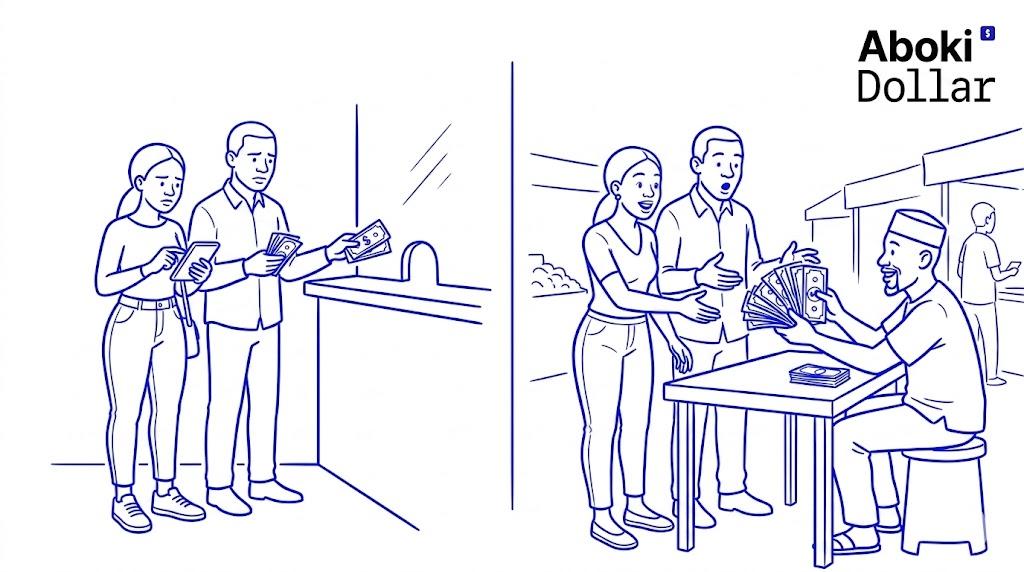
If you’ve ever compared the official dollar to naira rate with what’s available in the open market, you’ve probably noticed the gap.
Sometimes it’s small. Other times, it’s wide enough to make a big difference in how much you receive.
So why does this gap exist in the first place?
To fully understand it, this complete guide to black market vs CBN rates gives helpful background.
1. Limited Access to Official Forex
The official exchange rate is managed and controlled.
But not everyone can access dollars at that rate.
Banks often have restrictions, requirements, and limited supply.
When access is limited, people look for alternatives.
2. High Demand for Dollars
Nigeria relies heavily on imports and foreign payments.
This creates constant demand for dollars from:
- Businesses
- Students
- Travelers
- Individuals making online payments
When demand is higher than supply, prices increase in the open market.
You can see this reflected in the live dollar to naira rate.
3. Supply Constraints
Dollars don’t just appear in the system.
They come from sources like:
- Oil exports
- Foreign investments
- Remittances
If these inflows drop, supply becomes tight.
This makes it harder to meet demand at official rates.
4. Market Forces vs Controlled Pricing
The official rate is controlled and doesn’t always change instantly.
The parallel market, however, responds quickly to real-time demand and supply.
This difference in how rates are set creates a gap.
You can compare the official side on the CBN exchange rate page.
5. Policy Restrictions
At times, policies limit who can access foreign currency and for what purpose.
When people can’t meet those conditions, they turn to the open market.
This increases pressure on that side of the market.
6. Speed and Flexibility of the Market
The parallel market is faster and more flexible.
Transactions happen quickly, with fewer formal processes.
That convenience often comes with a higher rate.
7. Expectations and Market Behavior
Sometimes, the gap widens based on expectations.
If people believe the naira might weaken, they rush to buy dollars.
This pushes the parallel market rate higher, even if the official rate stays unchanged.
Simple Example
Let’s say the official rate is ₦1,300, but demand in the open market is very high.
Traders may sell at ₦1,400 or more because buyers are willing to pay that price.
You can see how this affects real value using how much 100 dollars is in naira today.
Why the Gap Doesn’t Close Easily
Closing the gap depends on balancing supply and demand.
This requires:
- More foreign exchange inflow
- Stable economic conditions
- Improved access to official forex
Until these factors align, the gap is likely to remain.
What This Means for You
The rate you get depends on where you exchange.
- Official channels offer lower rates but limited access
- Parallel markets offer easier access but higher rates
That’s why it’s important to check both before making decisions.
You can use the currency converter to compare values instantly.
Final Thoughts
The gap between official and parallel market rates comes down to access, supply, and demand.
One side is controlled, while the other reflects real-time market activity.
Understanding this difference helps you navigate the system with more confidence and make better financial choices.