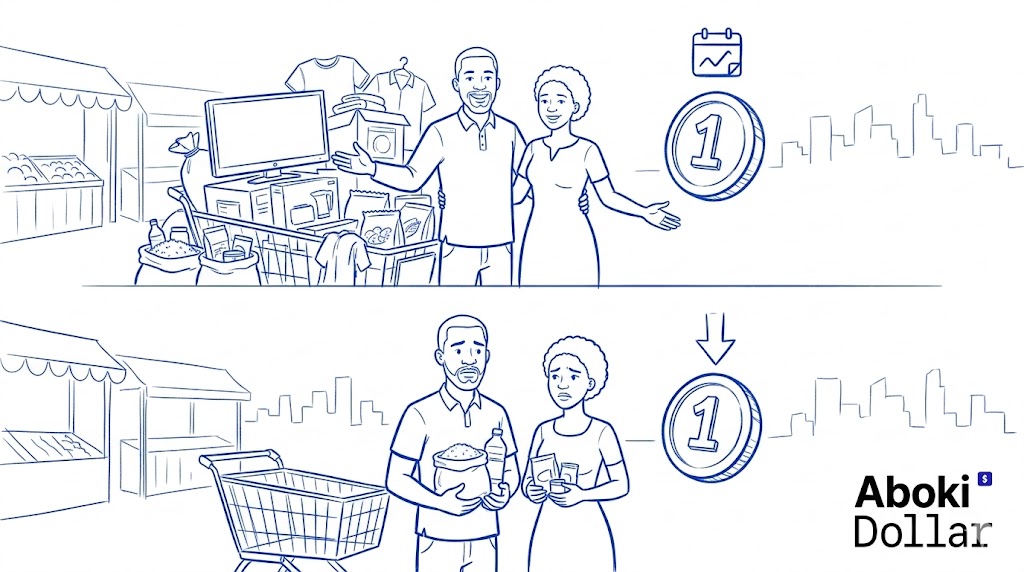
₦1 million used to feel like serious money in Nigeria. Today, it still matters, but what it can actually buy has changed a lot in a short time.
If you’ve noticed that your money doesn’t stretch as far as it used to, you’re not imagining things. Inflation and exchange rate pressure have quietly reduced the real value of the naira.
₦1 Million Then vs Now: What Changed?
Just a year ago, ₦1 million could comfortably cover major expenses like rent, food, or even a small business setup. Today, that same amount doesn’t go nearly as far.
The main reasons are simple:
- Rising inflation across food, transport, and housing
- Higher dollar to naira exchange rates
- Increased cost of imports and logistics
To understand the bigger picture, it helps to follow the black market dollar to naira rate, which affects the real cost of goods in Nigeria.
Food Prices: The Biggest Difference
Food is where the change is most obvious.
- A bag of rice that cost around ₦35,000–₦40,000 last year can now go for ₦70,000 or more
- Tomatoes, pepper, and other staples have seen sharp increases
- Feeding a family now takes a larger share of income
This is directly tied to inflation and higher transportation costs driven by fuel prices.
Rent and Housing Costs
₦1 million used to secure decent rent in many parts of Nigeria. Today, landlords have adjusted prices to match rising costs.
- In major cities, rent has increased significantly
- Agency and agreement fees are higher
- More people are forced to downsize or relocate
The weakening naira also affects construction costs, which pushes rent even higher over time.
Transportation and Fuel
Transport costs have increased sharply compared to last year.
- Fuel prices have risen significantly
- Public transport fares have doubled in many areas
- Logistics costs now affect almost every product
This is one of the key reasons everyday items feel more expensive even when they are locally produced.
Electronics and Imported Goods
Anything tied to imports has become more expensive.
- Phones, laptops, and gadgets now cost much more
- Cars and spare parts have increased in price
- International services are more expensive in naira terms
This is because importers rely on foreign currency. You can track how this affects pricing using the Aboki Dollar currency converter.
Simple Comparison: Then vs Now
Here’s a rough idea of what ₦1 million could cover:
- Last Year: Rent + basic furnishing or several months of family feeding
- Today: Rent alone in many areas or fewer months of household expenses
The difference shows how much purchasing power has dropped.
Why This Is Happening
The change in value is driven by a combination of factors:
- Inflation reducing the buying power of the naira
- Higher demand for dollars
- Limited foreign exchange supply
- Global economic pressures
You can explore this further in our guide on how inflation affects the dollar to naira rate.
What ₦1 Million Means in Dollar Terms
Another way to understand the change is by converting it to dollars.
- At ₦800/$ (past rate) → ₦1,000,000 ≈ $1,250
- At ₦1,500/$ (recent rate) → ₦1,000,000 ≈ $667
That drop shows how much value has been lost internationally.
For live conversions, you can check $1000 to naira and compare it with current rates.
What You Can Do
While you can’t control inflation, you can adjust how you manage money:
- Track exchange rates regularly
- Plan purchases ahead of price increases
- Diversify savings if possible
- Stay updated on market trends
Final Thoughts
₦1 million still holds value, but it doesn’t carry the same weight it did last year. Rising prices and exchange rate pressure have reduced what it can buy across almost every category.
Understanding these changes helps you make better decisions, whether you’re budgeting, investing, or planning major expenses.
For real-time updates, accurate conversions, and daily insights, keep checking Aboki Dollar and follow the latest news in our Bureau De Change section.