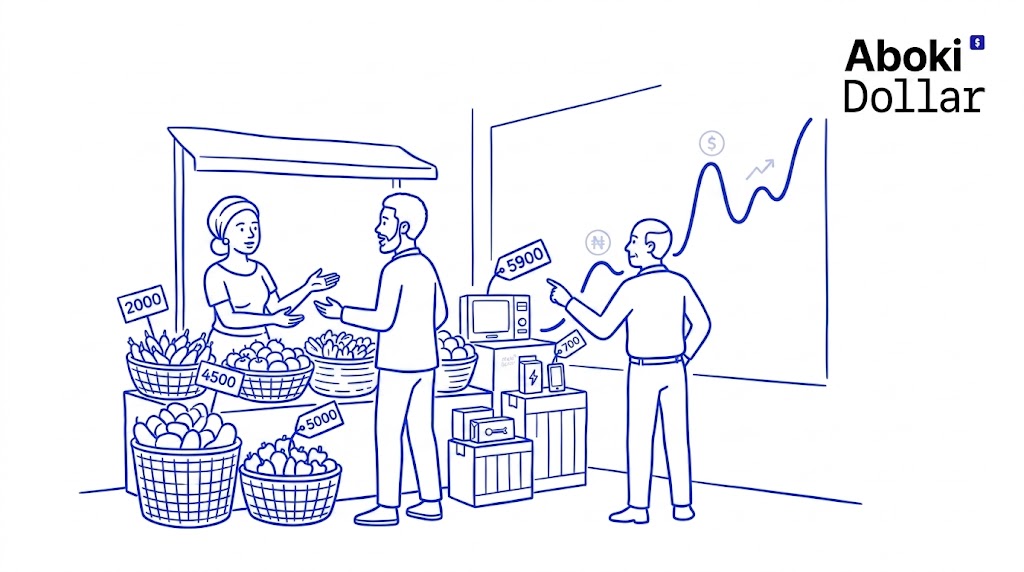
Inflation is one of the biggest reasons the dollar to naira exchange rate keeps changing in Nigeria. You may not always see the connection immediately, but once inflation rises, the pressure on the naira usually follows.
If you’ve noticed that prices are going up and the dollar is getting more expensive at the same time, it’s not a coincidence. They are closely linked.
What Is Inflation in Simple Terms?
Inflation means a general increase in the prices of goods and services over time. When inflation rises, your money buys less than it used to.
For example, if ₦10,000 could buy a full basket of food last month but only half this month, inflation has increased.
How Inflation Connects to Dollar to Naira Rate
When inflation rises in Nigeria, the naira tends to lose value. This creates more demand for stable currencies like the US dollar.
Here’s how it plays out:
- People move their savings into dollars to protect value
- Businesses need more dollars to import goods
- Demand for dollars increases faster than supply
As demand rises, the exchange rate goes up. That’s why you’ll often see higher rates on the black market dollar to naira page during periods of high inflation.
Why High Inflation Weakens the Naira
When inflation is high, confidence in the local currency drops. People and investors start looking for safer alternatives.
This leads to:
- More people holding dollars instead of naira
- Reduced foreign investment
- Increased pressure on foreign exchange reserves
The Central Bank of Nigeria tries to manage this through monetary policies, but inflation still plays a major role in shaping exchange rates.
Real-Life Example
Let’s say inflation rises sharply due to higher fuel and food prices:
- Businesses increase prices to cover costs
- Consumers spend more naira for the same goods
- Importers demand more dollars
- The naira weakens as dollar demand rises
This chain reaction is one of the key reasons explained in our guide on why the dollar rate changes every day in Nigeria.
What Happens When Inflation Slows Down?
When inflation is controlled, the pressure on the naira reduces.
- The cost of goods stabilizes
- Demand for dollars becomes more balanced
- The exchange rate becomes more stable
This doesn’t always mean the naira will strengthen immediately, but it creates a more stable environment for the currency.
Why This Matters for You
Inflation doesn’t just affect economists. It impacts everyday financial decisions:
- If you receive money from abroad, rates may change your payout
- If you run a business, import costs may increase
- If you’re saving in naira, your purchasing power may drop
You can always check real-time value using the Aboki Dollar currency converter to see how inflation-driven changes affect your money.
Tracking Inflation and Exchange Rates Together
To fully understand what’s happening in the market, it’s important to track both inflation trends and exchange rates.
- Check the CBN exchange rate for official figures
- Monitor the black market rates for real-world pricing
- Follow updates in the Bureau De Change news section
Final Thoughts
Inflation and the dollar to naira rate move closely together. When prices rise across the economy, the naira often comes under pressure, pushing exchange rates higher.
Understanding this relationship helps you make better financial decisions, whether you’re exchanging money, saving, or running a business.
For daily updates and accurate rates, keep checking Aboki Dollar to stay ahead of market changes.