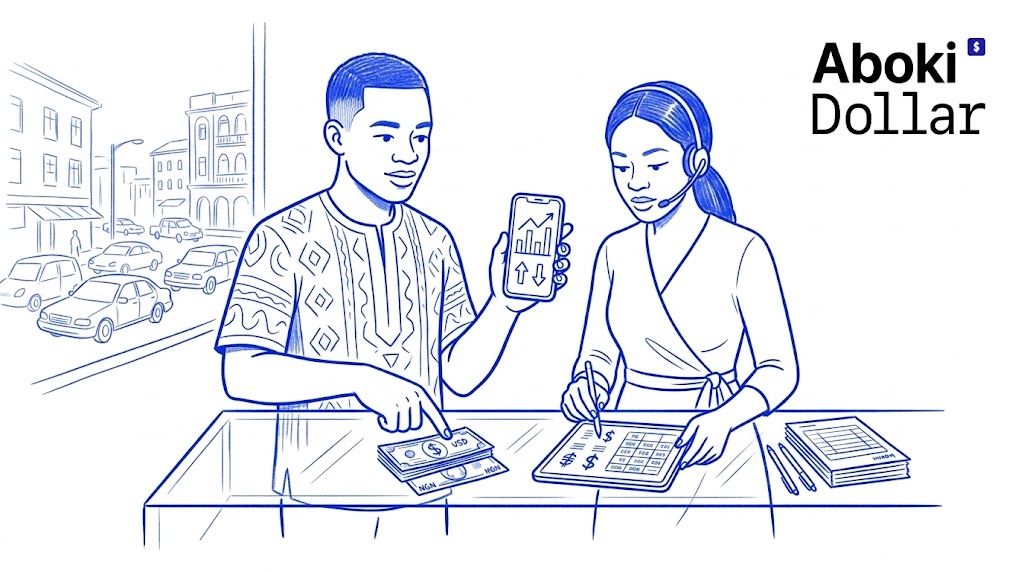
If you’ve ever walked up to a Bureau De Change (BDC) to exchange dollars, you’ve probably noticed something: the rate is rarely the same as what banks offer, and it can even change within hours.
So what exactly determines BDC rates in Nigeria? It’s not random, and it’s not controlled by just one factor. It’s a mix of supply, demand, policy, and market sentiment.
What Is a Bureau De Change (BDC)?
A Bureau De Change is a licensed operator approved to buy and sell foreign currencies. They serve as a middle ground between the official banking system and the open market.
In Nigeria, BDCs play a key role in making foreign currency accessible to individuals and small businesses who may not easily get dollars from banks.
You can always monitor real-time movements on the latest black market rates page to see how prices shift daily.
1. Supply and Demand: The Biggest Driver
At the core, BDC rates are driven by how much foreign currency is available versus how many people want it.
- High demand: More people need dollars for travel, school fees, imports, or savings
- Low supply: Limited inflow of foreign currency into the country
When demand is higher than supply, prices go up. When supply improves, rates can ease.
2. Central Bank Policies
The Central Bank of Nigeria (CBN) plays a major role in shaping the forex market. Policies such as restrictions on access to foreign exchange, changes in interest rates, or interventions in the market can influence BDC pricing.
You can compare these effects by checking the official CBN exchange rate alongside street rates.
For more details on policy direction, the Central Bank of Nigeria provides official updates and guidelines.
3. Interbank and Official Market Rates
BDC operators don’t operate in isolation. They often take cues from the official forex market, including interbank rates and government benchmarks.
However, because access to these official rates is limited, BDCs adjust their prices to reflect real market conditions.
4. Speculation and Market Sentiment
Sometimes, rates move not just because of actual demand, but because of expectations.
- If people believe the naira will weaken, more people rush to buy dollars
- If confidence improves, demand may slow down
This behavior alone can push BDC rates higher or lower within a short time.
5. Inflation and Economic Conditions
Inflation affects how people see the value of the naira. When prices rise locally, many turn to dollars as a store of value.
This increases demand and, in turn, affects BDC rates. You can explore this deeper in this guide on how inflation impacts dollar to naira exchange rates.
6. External Factors
Global events also play a role. Oil prices, foreign investment flows, and international trade all affect how much foreign currency enters Nigeria.
For example:
- Higher oil revenue can increase dollar supply
- Lower exports or reduced investment can tighten supply
These changes eventually reflect in BDC pricing.
7. Daily Market Dynamics
BDC rates can change multiple times a day based on ongoing transactions. Unlike fixed pricing systems, the market is fluid.
That’s why many people check tools like the currency converter to quickly estimate how much they’ll get before making a transaction.
How to Stay Ahead of BDC Rate Changes
If you regularly exchange foreign currency, here are a few simple tips:
- Track rates daily using trusted platforms
- Compare different sources before exchanging
- Avoid rushing during peak demand periods
Even checking something as simple as the value of 100 dollars in naira today can help you understand current pricing trends.
Final Thoughts
BDC rates in Nigeria are shaped by real market forces. Supply and demand, government policy, global trends, and everyday human behavior all play a part.
Once you understand these drivers, the daily changes in dollar to naira rates start to make a lot more sense.
And more importantly, you’ll be in a better position to decide when and how to exchange your money.