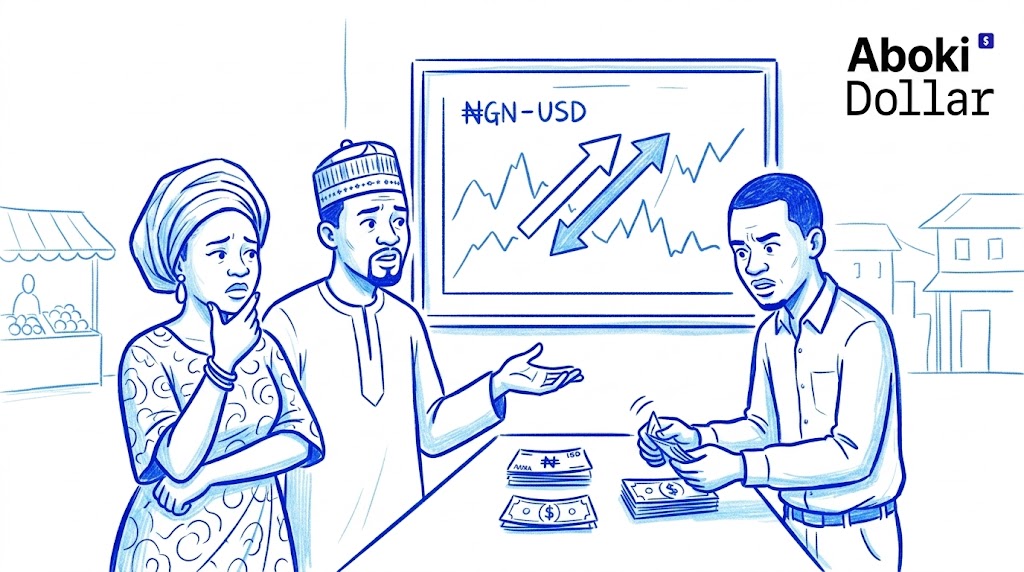
When the dollar to naira rate moves in Nigeria, one of the biggest drivers behind it is policy decisions from the Central Bank.
These changes don’t just affect banks or investors. They directly influence how much you get when you exchange money, send funds, or even price goods.
So how exactly do CBN policies affect exchange rates? Let’s break it down in a way that actually makes sense.
What Are CBN Policy Changes?
CBN policies are decisions made to control money supply, manage foreign exchange, and stabilize the economy.
These include:
- Foreign exchange restrictions
- Interest rate adjustments
- Currency interventions
- Guidelines for banks and Bureau De Change operators
You can always compare how these policies reflect in real time by checking the official CBN exchange rate.
1. Forex Restrictions and Access
One of the most common policy tools is restricting access to foreign currency for certain imports or transactions.
When access becomes tighter:
- Demand shifts to alternative markets
- Pressure builds on the naira
- Exchange rates rise outside official channels
This is closely connected to how the market behaves, which you can explore in this guide on why the dollar rate changes in Nigeria.
2. Interest Rate Decisions
When the CBN raises interest rates, it can attract foreign investors looking for higher returns.
More foreign investment means more dollars entering the economy, which can help stabilize or strengthen the naira.
On the flip side, lower rates can reduce inflows and put pressure on the currency.
3. Direct Market Intervention
Sometimes, the CBN steps in directly by supplying dollars to the market.
This can:
- Increase dollar availability
- Reduce pressure on exchange rates
- Narrow the gap between official and market rates
However, these effects may not last if underlying demand remains high.
For deeper context, the Central Bank of Nigeria regularly publishes updates on its interventions and policies.
4. Policy Consistency and Market Confidence
How people react to policy changes matters just as much as the policies themselves.
If policies are seen as stable and predictable:
- Confidence improves
- People are less likely to rush into buying dollars
If policies change frequently or create uncertainty:
- Demand for foreign currency can spike
- The naira may weaken quickly
5. Impact on Black Market Rates
CBN policies often have a direct impact on the gap between official and open market rates.
When access to official forex is limited, more people turn to alternative markets. This increases demand and pushes rates higher.
You can track this difference using the current dollar to naira black market rate.
This also explains why black market rates are often higher than bank rates in Nigeria.
6. Long-Term Effects on the Naira
Policy decisions don’t just affect short-term movements. Over time, they shape the direction of the currency.
Strong, consistent policies can:
- Improve investor confidence
- Increase foreign inflows
- Support a more stable exchange rate
Weak or inconsistent policies can have the opposite effect.
What This Means for You
Whether you’re sending money, exchanging currency, or running a business, CBN policies directly affect your outcomes.
That’s why it helps to stay informed and track rate changes regularly.
Tools like the currency converter make it easier to estimate how much you’ll get before making a decision.
Even checking something simple like the value of 100 dollars in naira today can give you a quick sense of where the market is heading.
Final Thoughts
CBN policy changes play a major role in shaping Nigeria’s exchange rate.
They influence supply, demand, and overall confidence in the market.
Understanding how these policies work helps you make smarter financial decisions, whether you’re exchanging money today or planning ahead.