The value of the naira doesn’t stay the same. Some days it gains strength, other days it drops and for many Nigerians, it can feel unpredictable.
But once you understand what drives these movements, it starts to make sense. You can always track current movements on the Aboki Dollar homepage for real-time updates.
What It Means When the Naira Falls or Rises
When the naira falls, it means you need more naira to buy one dollar.
When the naira rises, it means you need fewer naira to buy one dollar.
You can quickly see this in action by checking the current $1 to naira rate.
The Biggest Factor: Demand and Supply
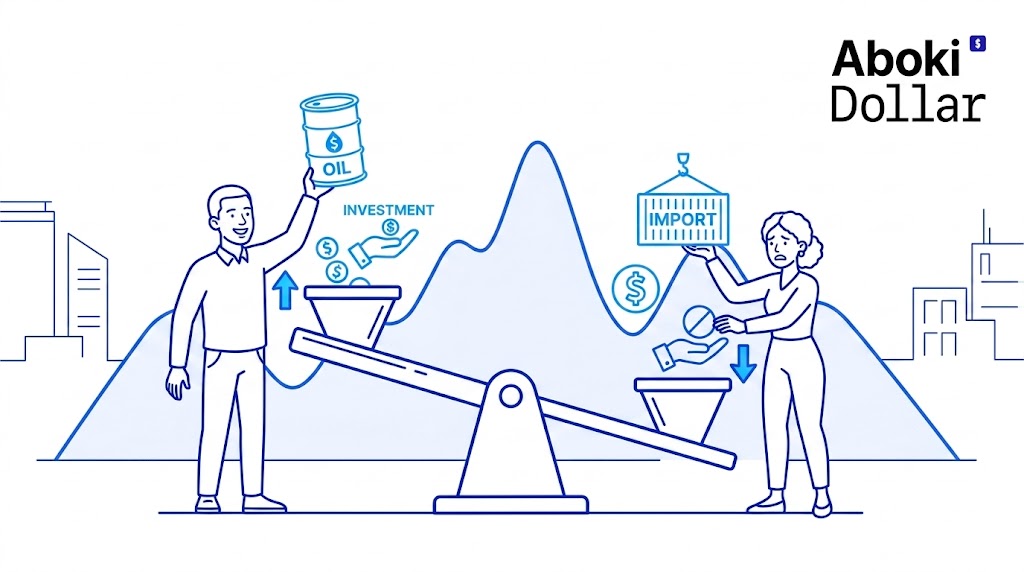
The main reason the naira rises or falls is simple demand and supply.
- If more people want dollars → the naira falls
- If more dollars are available → the naira rises
This is the same principle explained in detail in why the dollar rate changes in Nigeria.
Why Demand for Dollars Is High in Nigeria
Nigeria depends heavily on imports. Businesses and individuals need dollars for:
- Importing goods
- Paying school fees abroad
- Travel expenses
- Online payments and subscriptions
This constant demand puts pressure on the naira, especially when supply is limited.
Dollar Supply: What Strengthens the Naira
The naira performs better when more dollars enter the country. This happens through:
- Oil exports
- Foreign investments
- Remittances from Nigerians abroad
When supply increases, the exchange rate becomes more stable. You can compare this with official figures on the CBN exchange rate page.
The Role of the Black Market
In Nigeria, the parallel market plays a big role in determining the real exchange rate used by most people.
The black market dollar to naira rate often reacts faster to changes in demand and supply than the official rate.
That’s why many everyday transactions follow this market instead of the official one.
Global Factors Also Matter
The naira is not only affected by local issues. Global events also play a role, including:
- Changes in oil prices
- US interest rates
- Global economic uncertainty
Trusted financial platforms like Nairametrics and BusinessDay regularly explain how these global factors affect Nigeria.
How This Affects Your Money
Changes in the exchange rate impact everyday life more than most people realize.
- $100 to Naira can vary within days
- $500 to Naira affects business costs
- $1000 to Naira impacts larger payments
Even small changes in the rate can lead to noticeable differences in what you receive.
How to Stay Ahead of Naira Movements
You don’t need to predict the market perfectly. Just staying informed puts you ahead.
- Check rates daily before exchanging money
- Use the currency converter for quick calculations
- Follow market patterns in the weekly trend analysis
- Stay updated through Bureau De Change news
Conclusion
The naira rises and falls because of demand, supply, and global economic factors. There’s no mystery once you understand how these forces work together.
By paying attention to these patterns, you can make better decisions when exchanging money or planning transactions.
For accurate and up-to-date exchange rates, keep checking Aboki Dollar to stay informed.