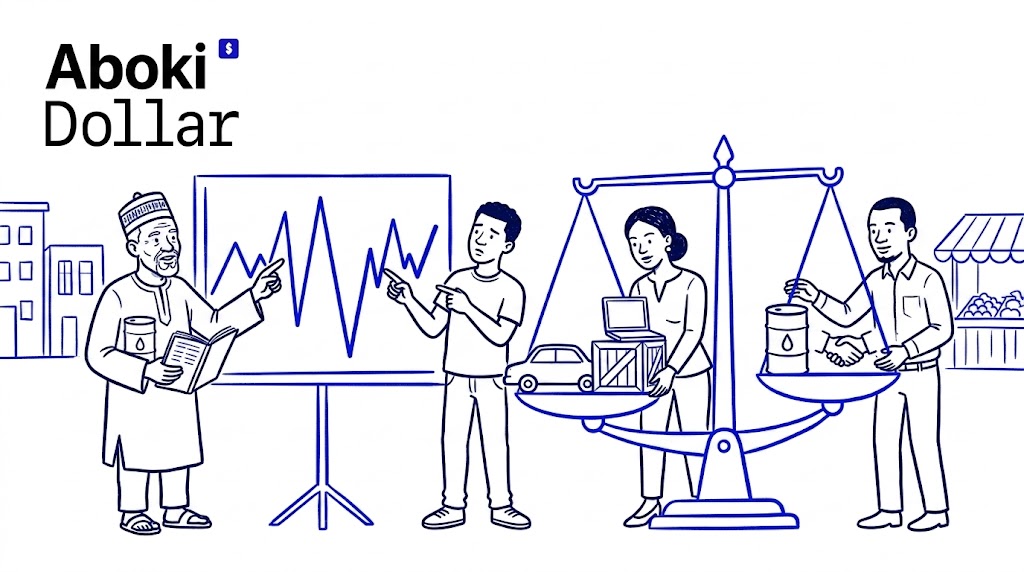
If you check the dollar to naira rate in the morning and then again later in the day, you might notice something surprising — it’s not the same.
The rate can move daily, sometimes even within hours.
So what’s really behind these constant changes?
If you’re new to how exchange rates work, this complete guide to the dollar to naira exchange rate gives a solid foundation before we go deeper.
1. Constant Changes in Demand
The biggest reason is demand.
Every day, people and businesses need dollars for different reasons:
- Importing goods
- Paying school fees abroad
- Travel expenses
- Online payments
When demand increases suddenly, the rate goes up. When demand slows, the rate can drop.
You can track these movements live using the current dollar to naira rate.
2. Limited Supply of Dollars
Supply doesn’t always match demand.
Dollars mainly come from:
- Oil exports
- Foreign investments
- Remittances from Nigerians abroad
If supply drops even slightly, the market reacts quickly.
That imbalance is one of the main reasons the rate doesn’t stay fixed.
3. Market Reactions and Expectations
Sometimes, the rate changes based on expectations, not just actual events.
If people believe the naira might weaken, they rush to buy dollars.
This increased demand pushes the rate up, even before anything major happens.
4. Central Bank Policies
Decisions from the Central Bank can influence daily movements.
These include:
- Adjustments to the official exchange rate
- Changes in access to foreign currency
- Market interventions
Even small policy signals can trigger reactions in the market.
5. Differences Between Official and Market Rates
Nigeria operates with multiple exchange rates.
When access to official forex is limited, more people turn to alternative markets.
This increases activity and causes frequent changes in those rates.
This is explained further here: black market vs CBN rate in Nigeria.
6. Global Influences
External factors also play a role.
- Oil price fluctuations
- Global economic conditions
- Interest rates in major economies
These factors affect how many dollars enter Nigeria, which in turn affects the exchange rate.
7. Real-Time Trading and Negotiation
In everyday transactions, especially outside formal channels, rates can change based on negotiation.
Different locations may also have slightly different prices at the same time.
This makes the rate feel like it’s always moving.
Simple Example
Let’s say demand for dollars increases in the afternoon while supply stays the same.
The rate will likely rise before the day ends.
You can see how these small changes affect value by checking how much 100 dollars is in naira today.
What This Means for You
Because the rate changes daily, timing matters.
Before sending or exchanging money:
- Check the current rate
- Compare across sources
- Avoid relying on outdated information
Tools like the currency converter can help you make quick calculations.
Final Thoughts
The dollar to naira rate changes every day because the market itself is always active.
Demand shifts, supply fluctuates, and new information keeps coming in.
Once you understand that, the constant movement stops being confusing and starts to make sense.