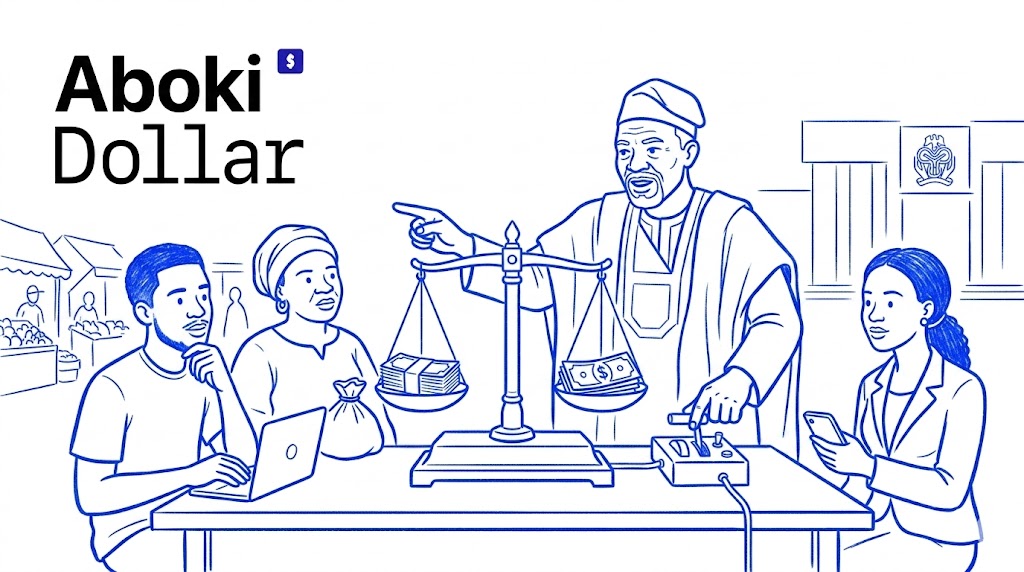
When the dollar to naira rate changes, one question comes up again and again: who is actually in control?
Is it the government? The Central Bank? Or the traders you see every day?
The truth is, no single group controls the exchange rate completely. It’s a mix of different forces working at the same time.
If you want a full foundation before diving in, this complete guide to the dollar to naira exchange rate breaks down the basics.
1. The Central Bank of Nigeria (CBN)
The Central Bank plays the biggest official role.
It does this by:
- Setting the official exchange rate
- Controlling access to foreign currency
- Intervening in the market by supplying dollars
Through these actions, the CBN influences how the market behaves, but it doesn’t fully control it.
2. Commercial Banks
Banks act as the bridge between the Central Bank and the public.
They:
- Distribute foreign currency to customers
- Set their own rates based on supply and demand
- Process international payments
If dollar supply is limited at the bank level, people start looking for alternatives.
3. Bureau De Change (BDC) Operators
BDC operators play a major role in everyday exchange transactions.
They respond directly to market demand.
- When demand for dollars rises, their rates increase
- When supply improves, rates can drop
This is why many Nigerians track the live dollar to naira market rate for a more practical view.
4. Everyday Buyers and Sellers
Regular people also influence the rate more than they think.
Importers, students, travelers, freelancers, and businesses all contribute to demand.
When demand increases across the board, it pushes the rate higher.
5. Foreign Investors and Remittances
Money coming into Nigeria plays a key role.
- Foreign investors bring in dollars
- Nigerians abroad send money home
When inflows are strong, supply improves and pressure on the naira reduces.
When inflows drop, the opposite happens.
6. Global Market Forces
What happens globally also affects the exchange rate.
- Oil prices
- Global interest rates
- Economic conditions worldwide
Since Nigeria earns a large part of its foreign currency from oil, global price changes can impact supply.
7. Why No One Fully Controls the Rate
Even though the CBN plays a major role, the exchange rate is still driven by supply and demand.
If demand is too high and supply is limited, no policy alone can keep the rate fixed for long.
This is also why differences exist between official and market rates, explained here: black market vs CBN rate in Nigeria.
Simple Example
Let’s say more businesses need dollars to import goods, but supply stays the same.
Even if the official rate doesn’t change, the market rate will likely rise.
You can see how this affects real value by checking how much 100 dollars is in naira today.
What This Means for You
Understanding who influences the exchange rate helps you make better decisions when:
- Sending or receiving money
- Exchanging currency
- Planning international payments
Tools like the currency converter can help you estimate outcomes before making a move.
Final Thoughts
No single person or institution fully controls the dollar to naira rate in Nigeria.
It’s shaped by the Central Bank, banks, traders, global factors, and everyday demand.
Once you understand this, the constant movement of the exchange rate becomes easier to follow, and easier to work with.