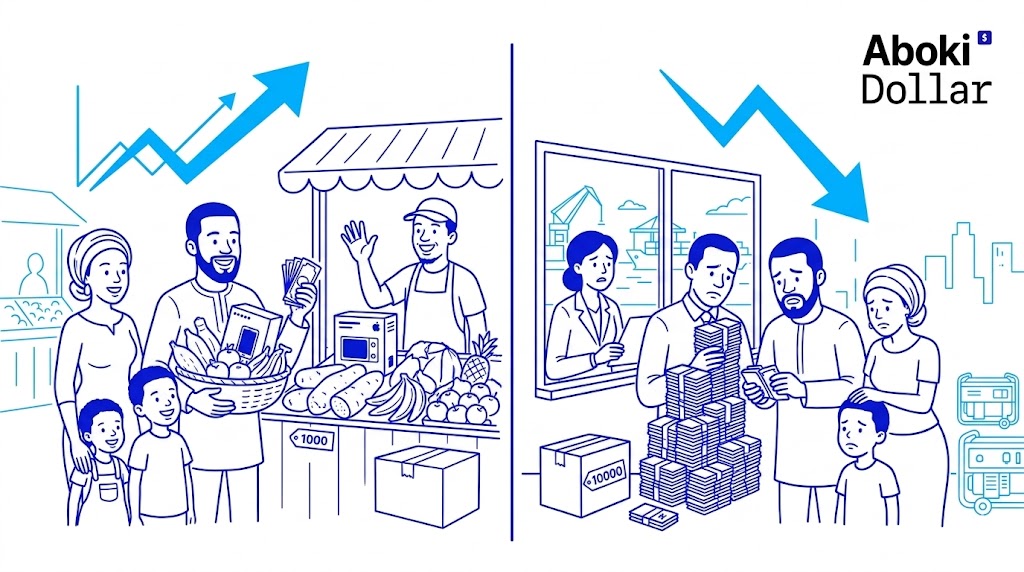
The value of the naira doesn’t stay the same for long. Some days it gains strength, other days it weakens. But what does that actually mean for you?
Whether you’re buying goods, running a business, sending money, or just tracking the dollar rate, changes in the naira directly affect your daily life. Once you understand how it works, you can make smarter financial decisions.
What Does It Mean When the Naira Gets Stronger?
When the naira strengthens, it means it gains value compared to foreign currencies like the US dollar.
For example, if the exchange rate moves from ₦1,500 per dollar to ₦1,300 per dollar, the naira has strengthened. You now need fewer naira to buy one dollar.
What This Means in Real Life
- Imported goods become cheaper
- Travel abroad becomes more affordable
- Businesses spend less on foreign supplies
- The cost of services priced in dollars drops
You can quickly see how these changes affect your money using the Aboki Dollar currency converter.
What Happens When the Naira Gets Weaker?
When the naira weakens, it loses value against the dollar. This means you need more naira to get the same amount of dollars.
For example, if the rate moves from ₦1,300 to ₦1,500 per dollar, the naira has weakened.
Real-Life Effects of a Weak Naira
- Prices of imported goods increase
- Fuel and transportation costs rise
- Food prices often go up due to higher logistics costs
- Businesses face higher operating expenses
This is why many Nigerians closely monitor the black market dollar to naira rate, as it reflects what people actually pay in everyday transactions.
Why the Naira Moves Up and Down
The naira doesn’t change randomly. Several factors influence whether it strengthens or weakens:
- Supply and demand for dollars: When demand is high and supply is low, the naira weakens.
- Foreign exchange inflows: Oil sales, remittances, and investments bring in dollars.
- Government policies: Decisions from the Central Bank of Nigeria affect liquidity and rates.
- Global economic trends: Oil prices and international markets also play a role.
You can read a deeper breakdown in our guide on why the dollar rate changes every day in Nigeria.
How It Affects Different People
For Individuals
If you receive money from abroad, a weaker naira means you get more naira for the same dollar amount. But if you’re paying for something in dollars, it becomes more expensive.
For Businesses
Companies that import goods feel the pressure when the naira weakens. Their costs go up, and they often pass those costs to customers.
For Investors
A stable or strengthening naira can attract foreign investors, while a weak and volatile naira may push them away.
Simple Example Using Real Amounts
Let’s say you receive $100:
- At ₦1,300/$ → you get ₦130,000
- At ₦1,500/$ → you get ₦150,000
That difference is why timing matters. You can explore more real examples in our guide on how much $100, $500, and $1000 is in naira today.
Where to Track Accurate Rates
To stay informed, it’s important to check reliable sources:
- CBN exchange rate for official pricing
- Black market rates for real-world transactions
- Latest Bureau De Change news for daily updates
Final Thoughts
When the naira strengthens, life becomes a bit easier for consumers and businesses. When it weakens, costs rise and financial pressure increases.
Understanding these movements helps you plan better, whether you’re exchanging money, running a business, or managing personal finances.
To stay ahead of every change, bookmark Aboki Dollar for live updates, accurate conversions, and daily insights into the dollar to naira market.